
To talk about burrata is to talk about Italy, tradition, and pure gastronomic indulgence. But it’s also about current trends, social media, and tables adorned with that perfect white sphere that, when sliced open, slowly spills its creamy heart. In recent years, Burrata Culture has expanded far beyond Italian borders to become a global phenomenon—and a staple on menus across the UK.
In this article, you’ll discover exactly what burrata is, how it differs from other Italian cheeses, what it tastes like, how to serve it, and why it has become one of the most sought-after foods of the moment.
What is Burrata?
Burrata is a fresh Italian cheese originally from the Puglia region in Southern Italy. At first glance, it might look like a large ball of mozzarella, but it is the interior that makes it truly unique.
The outside is a thin shell of fresh mozzarella, while the inside hides a luscious blend of stracciatella and double cream.
Traditionally made with cow’s milk (though buffalo milk versions exist), its name comes from the Italian word burro (butter). This gives us a massive clue about its texture and flavour: mild, milky, and slightly sweet.
Burrata Culture was born from this exact combination of simplicity and sophistication. It was originally a humble product created to use up mozzarella scraps, but it has conquered chefs and diners alike thanks to its incomparable texture.
Mozzarella, Burrata, and Stracciatella: What’s the difference?
It’s common to get these three confused, but the differences are quite distinct:
Mozzarella
- A fresh “stretched curd” (pasta filata) cheese.
- An elastic and slightly firm texture.
- A delicate, mild flavour.
- A compact, solid consistency.
- Perfect for pizzas, salads, or dishes where the cheese needs to hold its shape.
Burrata
- Creamier and more delicate than mozzarella.
- The outer shell is similar to mozzarella.
- A creamy centre, made from a blend of shredded mozzarella (stracciatella) and fresh double cream.
- Dual texture: firm on the outside, molten on the inside.
- Designed to be served fresh and “burst” open at the table.
Stracciatella
- It isn’t a standalone cheese, but rather the filling found inside burrata.
- It consists of fine shreds of mozzarella mixed with fresh double cream.
- An incredibly creamy and rich, velvety texture.
- Commonly used as a filling or as a decadent base for cold starters.
While mozzarella provides structure, burrata provides the spectacle. This culinary “wow factor” has turned burrata into a symbol of contemporary, ingredient-led cooking.
What does it taste like?
Burrata has a mild, milky, and slightly sweet flavour. It isn’t an intense or aged cheese; its magic lies in its freshness.
When you try it, you first experience the firm yet tender outer shell, followed by the buttery interior that coats the palate with a silky sensation.
One of its best traits is its versatility. Burrata pairs beautifully with almost anything:
- Tomato and olive oil
- Balsamic vinegar
- Prosciutto or anchovies
- Fruits like figs or peaches
- Honey and toasted nuts
Its ability to adapt to different flavours without losing its own identity is one of the reasons burrata is such a resounding success.
Foolproof Burrata Recipes
In Burrata Culture, we believe that when the product is this good, you don’t need to overcomplicate things. At Francesco’s, we focus on combinations that respect its natural texture.
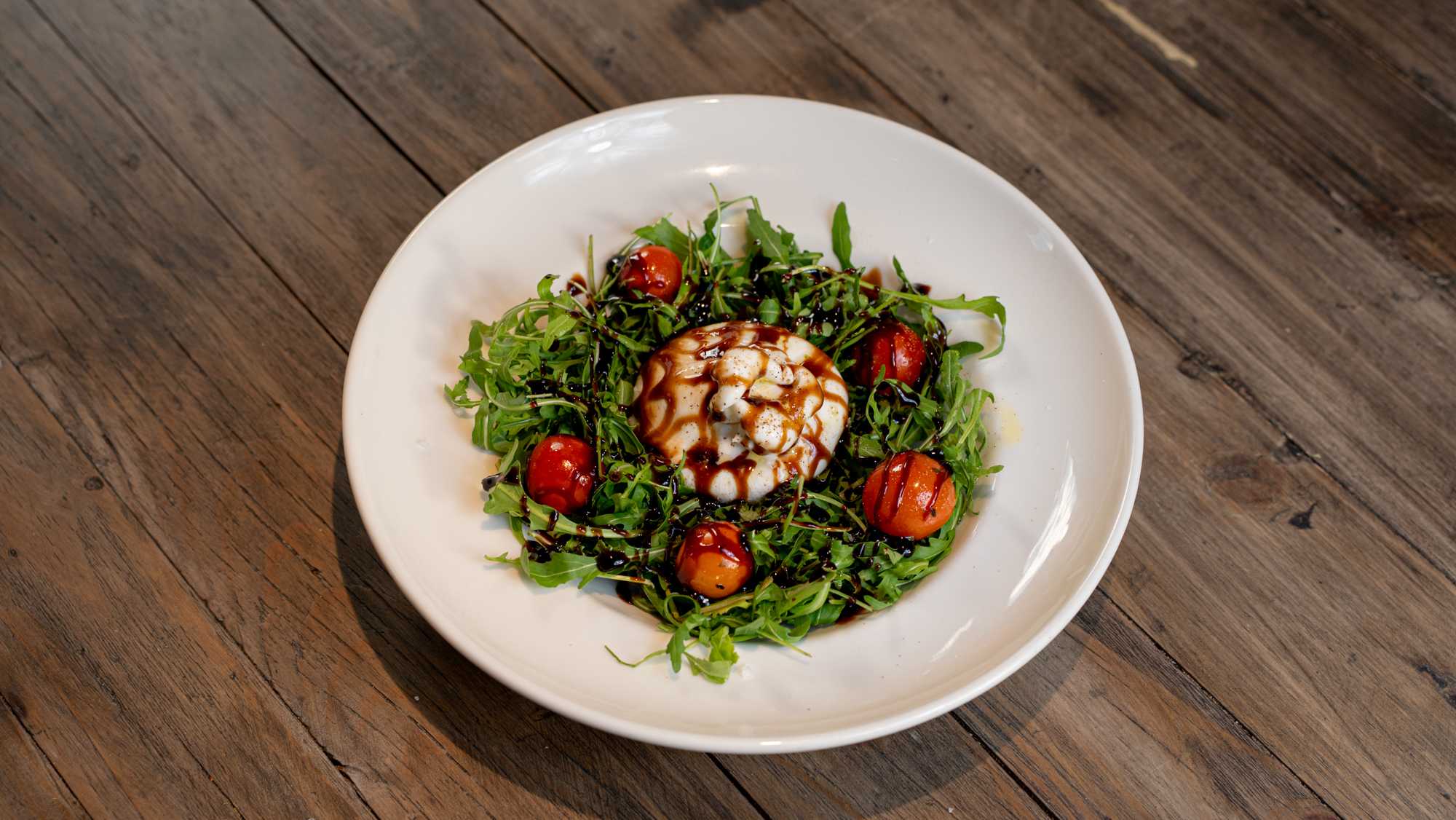
Burrata with Roasted Cherry Tomatoes and Balsamic Vinaigrette
Ingredients:
- Fresh burrata
- Cherry tomatoes
- Extra virgin olive oil
- Sea salt
- Balsamic vinegar
Preparation
- Roast the cherry tomatoes with extra virgin olive oil and a pinch of salt until they lightly caramelise. This intensifies their natural sweetness and creates a warm contrast to the cool cheese.
- Place the warm tomatoes as a base on the plate.
- Set the burrata in the centre.
- Finish with a balsamic vinaigrette for acidity, depth, and balance.
When you cut into the burrata, its creamy heart mingles with the tomato juices and the vinaigrette. The result is pure balance: sweetness, acidity, and creaminess in a single mouthful—a combination that is fresh, mellow, and utterly irresistible.
Top Tip: Never cook the burrata itself. It should be served at room temperature to allow the creamy centre to flow perfectly.
One thing is certain: burrata is a culinary wildcard. Whether it’s tossed into a salad of leafy greens, tomatoes, seasonal fruits, or toasted nuts—burrata never misses the mark. Its creaminess elevates any combination, transforming a simple dish into a truly gourmet experience.
Is burrata healthy? Nutritional value and calories
Burrata is a fresh cheese, but it is also quite high in fat due to the double cream inside. On average, 100g can contain between 300 and 350 calories. However, it does provide high-quality protein, calcium, and fat-soluble vitamins.
While it’s not an everyday food for those on a low-fat diet, it can certainly be part of a balanced lifestyle when enjoyed in moderation.
As with many of life’s greatest culinary pleasures, balance is the key.
How to choose a top-quality burrata
To avoid disappointment, keep these tips in mind:
- Freshness is paramount: It must be stored in its whey (the liquid in the container).
- Recent production date: Always check the label for the freshest possible batch.
- The “Touch Test”: The exterior should feel firm but yield slightly—it should have a gentle “bounce.”
- The Scent: It should have a clean, milky aroma. If you notice a sharp, acidic, or sour smell, it is no longer at its best.
- Provenance: Opt for Italian-made burrata. Those from Puglia generally guarantee the highest level of authenticity.
A high-quality burrata is the difference between a “fine” meal and a truly memorable one.
Why burrata is a global success
The rise of burrata isn’t a fluke; it’s the result of several winning factors:
- Irresistible texture: It’s incredibly creamy and visually stunning.
- The sensory experience: Slicing it open at the table creates a sense of theatre and anticipation.
- Culinary versatility: It pairs as well with salty anchovies as it does with sweet peaches.
- Instagram appeal: It is the perfect aesthetic for social media foodies.
- The “Craft” trend: A move towards fresh, artisanal, and authentic products.
In an era where the experience matters as much as the flavour, burrata ticks every single box.
Frequently Asked Questions
Can you freeze burrata?
It’s not recommended. Freezing alters that signature creamy texture, causing it to lose its luxurious consistency.
How long does it last in the fridge?
Ideally, eat it the day you buy it, or within 24–48 hours at most. The fresher the cheese, the better the experience.
Is it suitable for lactose intolerance?
It contains significant amounts of lactose, so it isn’t suitable for those with a severe intolerance unless you find a specifically labelled lactose-free version.
In short, burrata is far more than just a passing food trend. It is tradition, texture, spectacle, and flavour all wrapped into one.
We’ll continue to enjoy it as it deserves: with quality ingredients, great company, and the knowledge that when the product is this good, you really don’t need anything else.

